Organizations beginning their RISE journey are increasingly recognizing that success hinges on thorough preparation. In North America alone, enterprises lost millions of dollars in 2025 due to inadequate planning. While a seamless migration is the goal, achieving it without the right groundwork is nearly impossible. With a solid game plan and the right tools from the start, organizations can significantly reduce both migration costs and timelines.
One critical, often overlooked, aspect of preparation is ensuring that core data and systems are as clean as possible.
Why? Core data is the foundation for accurate reporting, informed decision-making, and efficient operations. Clean, reliable data reduces unnecessary data movement, excess costs, and inaccuracies while unlocking the full potential of SAP S/4HANA, enabling real-time analytics, intelligent automation, and faster insights.
The same principle applies to your system landscape. Traditional on-premises ERP environments relied heavily on core modifications, but in a cloud-first world, this classic extensibility introduces complexity, higher costs, and upgrade challenges. SAP’s clean core approach addresses this by keeping systems close to standard; reducing custom code, adopting fit-to-standard processes, and shifting extensions to SAP BTP or approved APIs.
Excessive customizations can complicate both migration and day-to-day operations, increasing the risk of downtime and unexpected expenses. They can hinder innovation, particularly during system transitions. By maintaining a clean core throughout the migration, organizations can reduce technical debt, modernize processes, and enhance security, enabling them to fully realize the ecosystem’s full benefits without unnecessary obstacles.
Clean Core: How Can I Achieve That?
A successful migration begins with a detailed assessment of the current system landscape and the organization’s unique requirements. From there, preparation focuses on cleaning the core. Key areas include data volume and quality, compliance with governance frameworks, system and database complexity, and business process optimization.
Archiving data that is no longer required for daily operations further streamlines the landscape by reducing volume while still supporting reporting and compliance needs. Data cleansing is another critical first step. Analyzing existing data to remove duplicates, correct errors, and eliminate outdated or irrelevant records ensures accuracy and reliability.
In parallel, system cleanup activities, such as retiring unused programs, jobs, configurations, and customizations, help reduce complexity and improve overall performance.
On the system side, removing unused code, leveraging SAP best practices, and documenting unavoidable technical debt create a more stable, upgrade-friendly ERP foundation. A clean core not only simplifies the migration and ongoing maintenance but also future-proofs the business, enabling faster innovation, smoother upgrades, and the agility needed to compete in a rapidly evolving landscape.
Data Integrity & Quality Management
A clean database is foundational to maintaining data integrity throughout a migration. By ensuring that migrated data is accurate, complete, and consistent, organizations can fully leverage the new ecosystem’s capabilities, make confident business decisions, and streamline operations. Unlike legacy ERP systems, RISE with SAP introduces simplified data models and redesigned structures that require incoming data to strictly adhere to data-integrity principles.
Ensuring data quality across the landscape involves identifying and addressing problematic data. This means ensuring that data is attributable, legible, properly categorized, original, deduplicated, complete, current, and easily accessible. Data must also be free of redundant files and regularly maintained to prevent data loss, reporting inaccuracies, or process delays.
Data Volume Management
As enterprise data volumes continue to grow, organizations face rising storage, infrastructure, and licensing costs. Simply deleting data is rarely an option due to compliance and audit requirements. This is where a comprehensive data archiving strategy comes into play as a smarter and more sustainable solution. It not only reduces storage requirements but also plays a pivotal role in controlling the growth of data moving forward.
However, with a cohesive data volume management (DVM) strategy implemented prior to the migration, organizations can identify the existing data in their SAP environment to manage and reduce database size, control migration scope, and avoid unnecessary cost escalation. Without this preparation, organizations risk migrating years of inactive or low-value data into a system where data volume directly influences licensing tiers, infrastructure sizing, and long-term operating expenses.
How can I effectively address the large volume of data?
Data Archiving: Involves selectively relocating unused or infrequently accessed data to more cost-efficient storage, freeing up valuable resources and improving system performance. This plays a crucial role in efficient data management by moving inactive data to a separate location. This reduces storage and licensing costs while improving system performance by eliminating historical data that consumes processing resources.
Alongside this, archived data remains accessible, ensuring compliance with regulatory and legal requirements by securely retaining and retrieving data as needed.
This is where a comprehensive data archiving strategy comes into play as a smarter and more sustainable solution. It not only reduces storage requirements but also plays a pivotal role in controlling the growth of data moving forward. Archiving unnecessary data in advance prevents avoidable expenses and protects growth.
The Cost Benefits of RISE with SAP Migration Preparation
When planning an SAP RISE migration, organizations must select a data size package based on the volume of data migrated and pricing varies widely across package tiers. Larger databases mean bigger “t-shirt” size in the new RISE environment, meaning a more expensive transformation. For these situations, companies must guarantee that unnecessary data is not migrated and taking up space, quietly inflating costs, and hindering future growth.
This isn’t just a theory, but a proven practice. Some companies see cost savings exceeding 50% by archiving data. SaskPower, an almost century-old company, faced several pain points related to storage and hardware costs. As its SAP database continued to grow, these costs became unsustainable, especially looking for a transformation project to the cloud. SaskPower partnered with Auritas to implement a comprehensive data archiving solution. While keeping all legacy data accessible, SaskPower’s team experienced a 40% database reduction, positioning the organization for RISE readiness, ensuring the database was optimized ahead of migration to support performance and cost-efficiency.
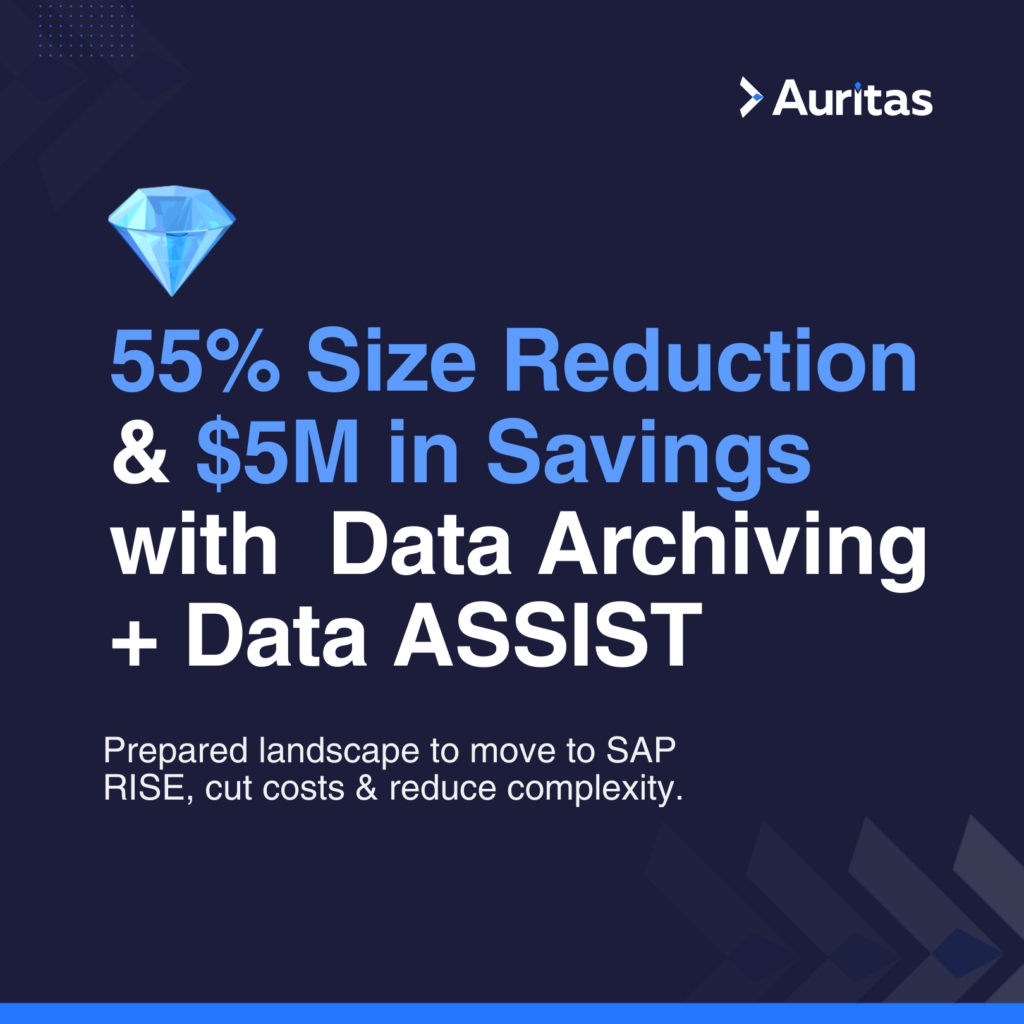
Another example is Waters Corporation. Challenged with immense costs and trying to justify a move to RISE, the team partnered with SAP and Auritas to address its nearly 60 years in operation and a data accumulation issue. A comprehensive data archiving project was implemented across four main systems, and Data ASSIST came in to automate the archive process. These efforts led to a 55% reduction in system size, unlocking over $5M in projected savings and ensuring a seamless, cost-effective migration to SAP RISE.
Furthermore, considering the cost benefits of migration preparation, we can also consider operational benefits that are achievable when maximizing S/4HANA and RISE with SAP.
- Minimized downtime for maximized migration efficiency
Cleaning and archiving the data directly contributes to faster, more predictable migrations. By archiving legacy data, deleting unnecessary records that already reached they retention timeline, and implementing automated archiving scheudling tools, organizations significantly reduce migration scope, complexity, and timeline. A lean, optimized database enables a smoother transition and minimizes the risk of errors during data extraction, transformation, and loading.
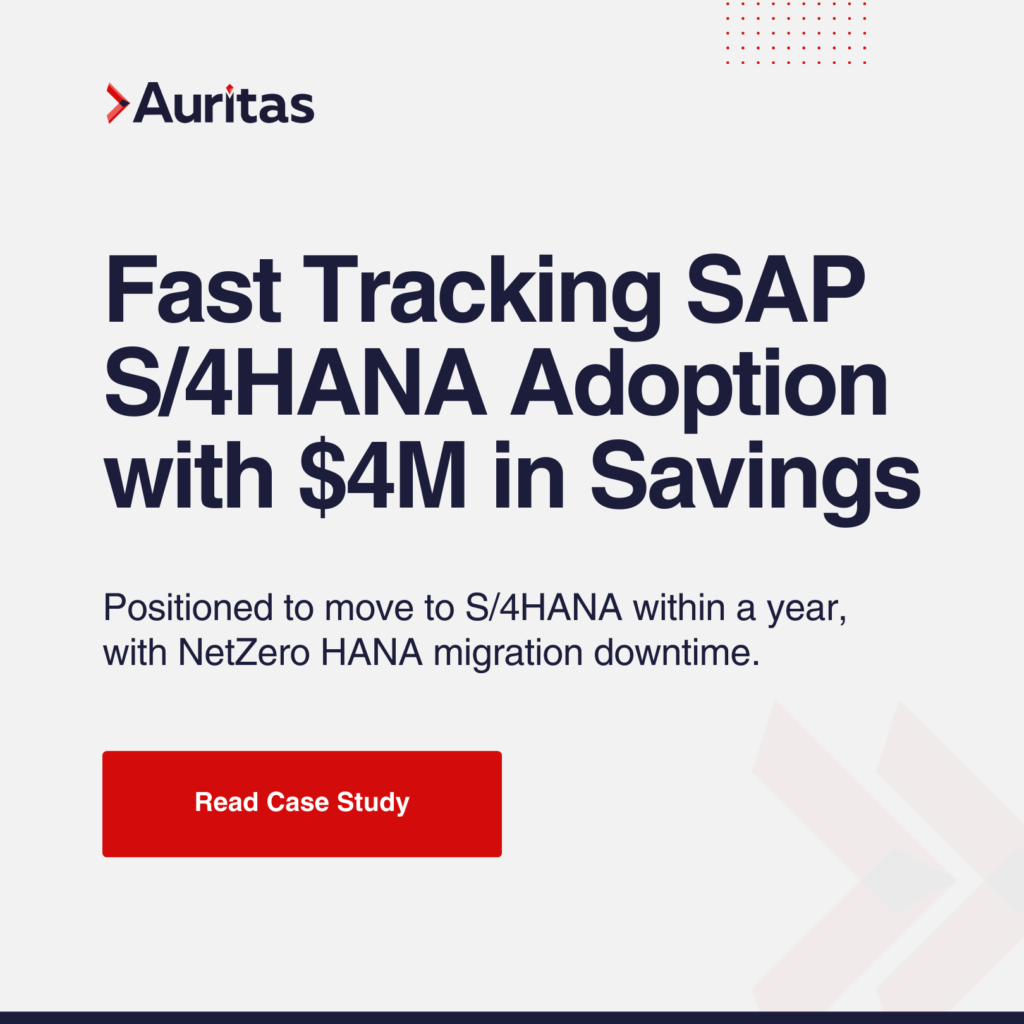
Having less data on your primary system to be migrated shortens migration timelines and reduces testing cycles. Benefits also come with less complexity, minimizes disruption to daily business operations, allowing organizations to go live with greater confidence and NetZero downtime.
- Operating in the new environment
S/4HANA is built on in-memory computing, delivering substantial performance improvements over traditional database systems. However, these benefits can only be realized if the underlying data is clean, relevant, and consistent. Poor-quality or excessive data consumes valuable memory and processing resources, limiting system responsiveness.
Optimized business processes further amplify these performance gains. By reviewing and streamlining workflows, eliminating redundancies, and standardizing data entry, organizations improve data quality while boosting user productivity. Automation tools for data cleansing, validation, and digitization reduce manual effort and help sustain long-term system stability.
In the end, the success of a RISE with SAP migration is not determined at go-live, but long before it begins. Organizations that invest in preparation, by prioritizing data quality, managing data volume, and embracing a clean core strategy, set themselves up for a smoother transition, lower costs, and stronger long-term performance. Without this foundation, even the most well-planned migrations can become complex, costly, and difficult to sustain.
Preparation transforms migration from a technical exercise into a strategic advantage. It reduces risk, accelerates timelines, and ensures that organizations are not simply moving to a new system, but moving forward with purpose. By taking control of data, simplifying the system landscape, and aligning with SAP best practices, businesses can fully unlock the value of S/4HANA and position themselves for continuous innovation.
For organizations embarking on their RISE journey, the message is clear: the cleaner the core data, the greater the return.
